
For Humans, Grounded in Tradition and Science
ClearFocus.
Most of what people call "energy" in a drink is really alertness, and most of that comes from caffeine. This page explains how alertness and fatigue work in the body, what research says about the plants traditionally used for stamina and focus, and exactly what goes into Energy Tea.
Steady energy, without the guesswork.
Energy 101
How alertness and fatigue are regulated, what research says about the plants traditionally used for energy and focus, and what's really inside Energy Tea — including the parts that need care.
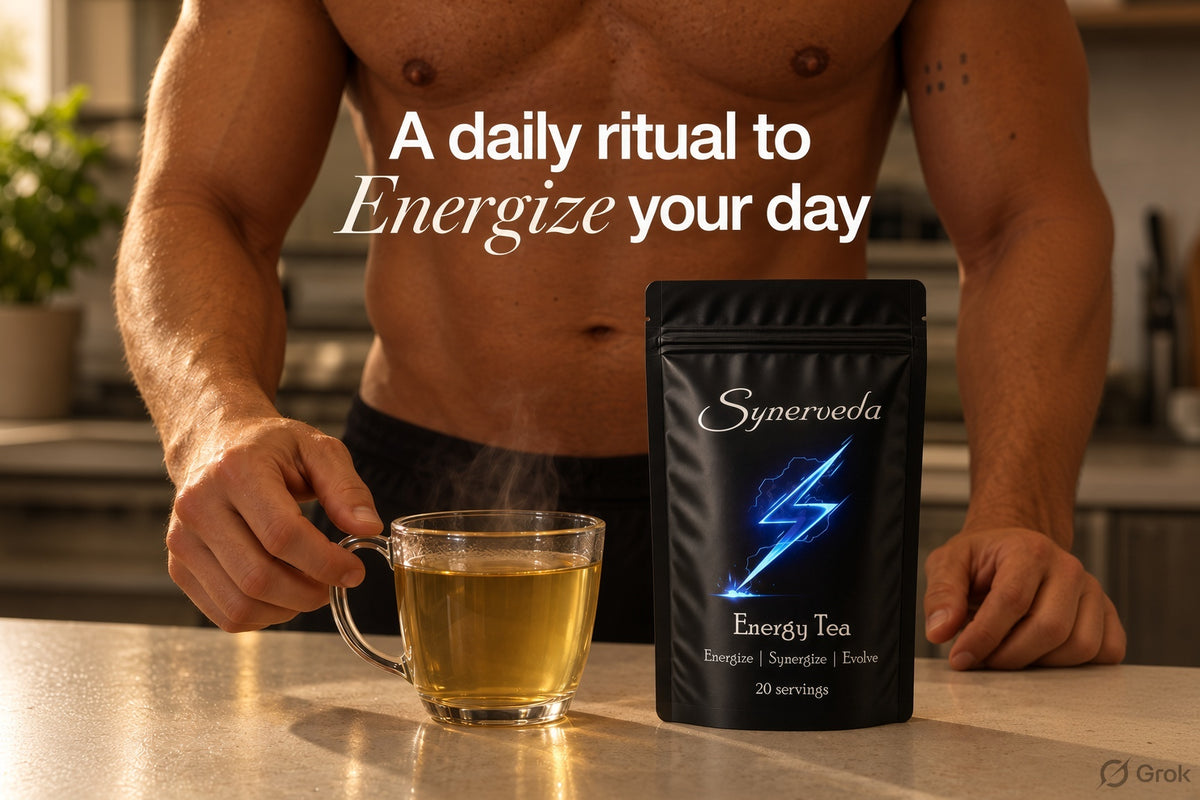
"What can I drink instead of another coffee?" is the question behind most energy teas. Usually it comes from wanting energy that feels steadier — fewer spikes, fewer crashes.
This page answers it as honestly as we can: how alertness works in the body, what's known about the plants in this blend, and exactly what's inside Energy Tea and why — including one ingredient that deserves extra care.
No drink creates energy out of nothing. Food provides the fuel; these plants affect how alert you feel. We'll be clear about which is which.
Key Terms
Definitions
Terms you'll run into on this page and across our ingredient research.
Concentrated Extract: A processed form of a herb where its compounds have been isolated and densified, so a given weight contains more of the active compound than the same weight of raw, dried herb.
Traditional Use: Historical use of a herb within a documented medical tradition (Ayurveda, Traditional Chinese Medicine, European herbalism, etc.), distinct from — and not a substitute for — modern clinical evidence.
Studied Compound: A specific chemical identified within a herb and examined in research, rather than the whole plant.
Adenosine: A compound that builds up in the brain the longer you are awake, creating the feeling of tiredness. Caffeine works mainly by blocking its effect.
Adaptogen: A traditional term for herbs believed to help the body cope with physical or mental strain, such as ginseng. It is a descriptive label, not a proven pharmacological category.
What Is "Energy", Really?
In your cells, energy means fuel: food broken down into a molecule called ATP. But when people say they feel low on energy, they usually mean alertness — and that's controlled by the brain. Through the day, adenosine builds up and signals fatigue; your circadian clock, set by light, pushes back during the day and lets go at night.
Most energy drinks and teas work on the alertness side, not the fuel side. Caffeine blocks adenosine, so the brain stops registering how tired it is. That is effective, but it borrows from later: when it wears off, the adenosine that built up is still there.
None of this is specific to Synerveda — it's standard physiology. It's here because every energy claim is really a claim about alertness, and it's worth knowing that before evaluating any of them.
How Functional Herbs Work
Energy herbs fall into two groups. Stimulants such as the caffeine in green tea and yerba mate act quickly and are well understood. Traditional "tonic" herbs such as ginseng and brahmi are studied for more subtle, slower effects on focus and mental fatigue.
-
Extraction — Caffeine, L-theanine and plant compounds such as ginsenosides and bacosides are released into hot water as the tea steeps.
-
Absorption — Caffeine is absorbed quickly, usually within an hour. Compounds from tonic herbs are absorbed more slowly and have been studied over days and weeks of use.
-
Interaction — Caffeine blocks adenosine receptors; L-theanine from tea has been studied for smoothing caffeine's edge; ginseng and brahmi have been studied for attention and memory, with mixed results.
We want to be precise about the word "studied." Studied doesn't mean guaranteed. It means researchers have looked at a specific mechanism and found a plausible, sometimes well-replicated, sometimes inconsistent, relationship — not a proven, universal effect in every person who drinks a cup.
What's Inside Energy — and Why
Energy Tea combines six plants: two natural sources of caffeine, two traditional tonic herbs, a traditional airway herb, and ephedra. They differ a lot in strength and in how well they are studied.
Green Tea
A source of caffeine and L-theanine. Human studies suggest the two together may support attention with fewer jitters than caffeine alone.
Yerba Mate
A traditional South American brew, drunk for alertness. It contains caffeine along with other plant compounds.
Ginseng
Panax ginseng, used in Traditional Chinese Medicine as a tonic for stamina. Studies on mental performance and fatigue are mixed and often small.
Brahmi
Bacopa monnieri, a classical Ayurvedic herb for the mind. Reviews of human trials report modest effects on memory, usually after weeks of daily use rather than within hours.
Vasaka
Justicia adhatoda, a traditional Ayurvedic herb used for the airways. It is traditional in respiratory formulas; we are not claiming an energy effect for it.
Ephedra (Ma Huang)
Ephedra sinica, a Traditional Chinese Medicine herb containing ephedrine, a potent stimulant. See the note below.
Ephedra is a strong stimulant, not a gentle herb. Its main compound, ephedrine, raises heart rate and blood pressure, and ephedra supplements were linked to serious heart and nervous-system events — which is why they were banned in the United States in 2004. Please do not drink Energy Tea if you have heart disease, high blood pressure, anxiety, thyroid problems or are pregnant, and do not combine it with other stimulants or medication without your doctor's advice.
Choosing a Quality Herbal Tea
Not all herbal tea on a shelf is built the same way. A few things worth checking before you buy any herbal blend — ours included:
Know Your Caffeine
An "energy" tea's effect depends mostly on how much caffeine is in it. A label should tell you which ingredients contain caffeine, so you can account for coffee and other drinks during the day.
Concentration, Not Just Presence
A herb listed on a label tells you it's present. It doesn't tell you how much, or in what form — whole dried leaf and a 10:1 extract are not the same product, even with an identical ingredient list.
Disclosed vs. Proprietary Blends
A "proprietary blend" on a label legally allows a brand to hide individual quantities. We don't use this — every botanical's relative share of the formula is something we're willing to show.
Traditional Use vs. Clinical Study
Both are worth knowing, but they're not the same kind of evidence. A herb with centuries of traditional use and a herb with a randomized clinical trial behind it are making different kinds of claims on your trust — a careful brand (and a careful reader) keeps that distinction clear.
Q&A
How much caffeine is in it?
The caffeine comes from green tea and yerba mate, and ephedra adds a separate stimulant. We have not published a tested per-cup caffeine figure, so treat each cup as a caffeinated drink and count it in your daily total.
When should I drink it?
Earlier in the day. Caffeine can affect sleep for many hours after you drink it, so most people are better off avoiding stimulant teas in the late afternoon and evening.
Can I drink it with coffee or energy drinks?
We'd advise against it. Stacking stimulants — especially alongside ephedra — increases the risk of a racing heart, jitters and raised blood pressure.
Has Energy Tea itself been clinically tested?
Not yet. Everything on this page describes research on the individual plants, and we would rather say that directly than let it imply otherwise.
Further Reading
Citations
- Fredholm, B. B., et al. (1999). Actions of caffeine in the brain with special reference to factors that contribute to its widespread use. Pharmacological Reviews.
- Haskell, C. F., et al. (2008). The effects of L-theanine, caffeine and their combination on cognition and mood. Biological Psychology.
- Owen, G. N., et al. (2008). The combined effects of L-theanine and caffeine on cognitive performance and mood. Nutritional Neuroscience.
- Heck, C. I., & de Mejia, E. G. (2007). Yerba mate tea (Ilex paraguariensis): a comprehensive review on chemistry, health implications, and technological considerations. Journal of Food Science.
- Reay, J. L., Kennedy, D. O., & Scholey, A. B. (2005). Single doses of Panax ginseng (G115) reduce blood glucose levels and improve cognitive performance during sustained mental activity. Journal of Psychopharmacology.
- Pase, M. P., et al. (2012). The cognitive-enhancing effects of Bacopa monnieri: a systematic review of randomized, controlled human clinical trials. Journal of Alternative and Complementary Medicine.
- Claeson, U. P., et al. (2000). Adhatoda vasica: a critical review of ethnopharmacological and toxicological data. Journal of Ethnopharmacology.
- Shekelle, P. G., et al. (2003). Efficacy and safety of ephedra and ephedrine for weight loss and athletic performance: a meta-analysis. JAMA.
- Haller, C. A., & Benowitz, N. L. (2000). Adverse cardiovascular and central nervous system events associated with dietary supplements containing ephedra alkaloids. New England Journal of Medicine.
See the full Energy Tea formula, how to brew it, and who should avoid it.
Shop Energy Tea →*This page discusses general physiology, published research, and traditional use associated with Energy Tea's botanical ingredients. It does not describe clinical research on Energy Tea as a finished product, and does not constitute a claim that this product diagnoses, treats, cures, or prevents any disease. Statements have not been evaluated by the FSSAI. Please consult a healthcare practitioner before use, particularly if pregnant, nursing, or on medication.